Skip to content. | Skip to navigation

Phelps Stokes is a beacon for burgeoning leaders who dare to think differently about the world around them.

Sections
How you can get involved

Get Involved

Peace Corps
Peace Corps Logo
Phelps Stokes is partnering with the Peace Corps to ensure that all of our fellows, interns, staff and supporters are aware of the volunteer, graduate school and career opportunities available through the Peace Corps.  Life is calling.  How far will you go?  www.peacecorps.gov


Welcome to Phelps Stokes

 At Phelps Stokes, we believe big ideas can transform under-served communities in Africa and the Americas.

Since 1911, we have been a trusted partner of visionary leaders, foundations, corporations and nonprofits committed to creating lasting social change. After nearly a century, Phelps Stokes is as committed as ever to leveraging all of our support and resources to helping big ideas break through.

NEWS

Profile of an Emerging Leader and Ralph Bunche Scholar 

September 1, 2010

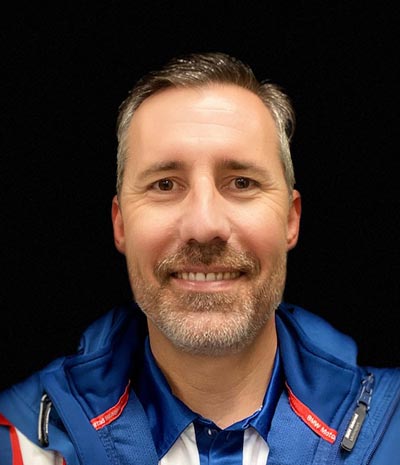
Morgan HintonMy name is Morgan Hinton and I am a junior, Political Science major at Winston-Salem State University (WSSU).  I am a member of WSSU's Honor's College, as well as a Chancellor's Scholar. However, the most influential organization I have been a part of in my academic career has been the Ralph Bunche Society. I have been a member of the Ralph Bunche Society since 2008, and during the 2009-2010 academic year I had the pleasure of serving as Vice President. On campus, I have worked alongside my RBS family in commemorating the memory of Dr. Ralph Bunche by increasing global awareness through forums and a variety of events.

This past summer I had the opportunity to utilize the knowledge and skill sets I have accumulated through the Ralph Bunche Society in the international arena. In May, I traveled alongside students from Wake Forest University to Zinkwazi, South Africa. In Zinkwazi, I volunteered at Bongimfundo Primary School, teaching basic math, English, and science to children in grades K-7.  Aside from teaching the curriculum to the students, I understood and empathized with the staff about the sociocultural complexities that South Africa has faced post-apartheid. The Ralph Bunche Society enabled me to relate to the South Africans; specifically I can attribute the knowledge base I'd accumulated on apartheid to an International Leadership Conference I attended at Appalachian State University in the fall. The speaker at the conference was a native of South Africa, and lectured on the topic of apartheid. My travel, lodging, and attendance at this leadership conference were sponsored by the Ralph Bunche Society. 

A week after returning from South Africa, I traveled to Washington, DC to attend the Sophomore Summer Policy Institute (SSPI) of the Institute for International Public Policy (IIPP) Program.  IIPP is a competitive 6-year fellowship program sponsored by the United Negro College Fund's Special Programs. The purpose of IIPP is to train, educate, and groom the most academically and professionally competitive students for careers in the field of International Relations. Through my inception into IIPP, I was able to meet and mingle with diplomats and ambassadors, as well as officials from the State Department, Peace Corps, the Department of Education, the World Bank, the Central Intelligence Agency, and others. I was also able to meet with officials from various organizations and advocacy groups within the non-profit sector. At IIPP I took courses on international relations and geopolitics, policy writing, global economics, and research methods. The workload was rigorous, and the experience was enriching.

I attribute my success within the IIPP Program to the Ralph Bunche Society. The life and work of Dr. Ralph Bunche became a reoccurring topic in IIPP lectures, and I felt most prepared to discuss Dr. Bunche because I'd participated in the RBS monthly movie nights where we viewed a documentary series on Dr. Bunche. In addition to the movie nights, I'd also hosted countless forums and events via RBS in which we discussed the life and work of Dr. Ralph Bunche. 

Currently, I am preparing to study abroad in Istanbul, Turkey at Bahceseshir University for the fall semester of 2010. I have never traveled abroad for an entire semester, yet my experiences within RBS have fostered my sense of global awareness, and I feel most prepared to live abroad for the next five months.  

Phelps Stokes Reacts to NY Times Column on Black Boys and Black Men

August 23, 2010

On August 20th, the New York Times published a column by Bob Herbert entitled “Too Long Ignored.”  The op-ed column focused on the grave situation facing a very large percentage of black men and black boys.  According to Herbert, “parental neglect, racial discrimination and an orgy of self-destructive behavior have left an extraordinary portion of the black male population in an ever-deepening pit of social and economic degradation.”  Herbert enumerates several statistics indicative of the large gaps between black men and black boys and the rest of the American population, namely education, employment and incarceration statistics.  Herbert writes, and Phelps Stokes agrees, “This is a cancer that has been allowed to metastasize for decades. Not only is it not being treated, most people don’t even want to talk about it. In virtually every facet of life in the United States, black people — and especially black boys and men — are coming up short. White families are typically five times as wealthy as black families. More than a third of all black children are growing up in poverty…” 

For 100 years, Phelps Stokes has been working to provide opportunities to those least well served in the United States, and is committed to ameliorating this appalling situation.  According to the Phelps Stokes President Dr. Badi Foster, “If good words and analyses were enough to move us forward, this situation would not persist.  What is missing is action.”  Through initiatives such as the National Homecomers Academy, Phelps Stokes is working to empower black men and black boys who are returning home from prison, or who are at risk of becoming incarcerated, to transform not only their lives but the lives of those around them.  To read more about the National Homecomers Academy, click here.

For more news, click here.

Document Actions
  • Send this
  • Print this
  • Bookmarks
Sign up for our newsletter
Enter your email address to subscribe to our newsletter:

 
© Phelps Stokes 2009-2010